 |
 |
|
PUKLLASUNCHIS
|
Prologue ׀ The Projects ׀ Biblio ׀ Credits
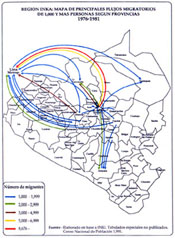
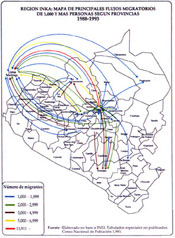
Cusco: A region of contrasts Cusco, the ancient capital of the Inca Empire (from the 12th century until 1533) lies on the eastern slope of the Central Andes at 3'200 m. a. s. l. in a subtropical mountain landscape. The traditional Quechua-speaking population of rural areas suffers from profound economic and social neglect, while the Spanish-speaking population of the tourist-oriented metropolis strives for a more modern and more independent way of live. This deep cultural and economic conflict has led to a continuous rural exodus. These migrant-fluxes have provoked on the one hand the aban-donment of large areas of far off agricultural territory, on the other an intensification of the use of primary resources in the surroundings of the densely populated areas. As a result, all sectors of society in Cusco, one of the classic Peruvian examples of rural to urban migration, are suffering the progressive destruction of their natural resources: water, forest and fertile ground.
|
 |
|