 |
 |
|
PUKLLASUNCHIS
|
Prologue ׀ The Projects ׀ Biblio ׀ Credits
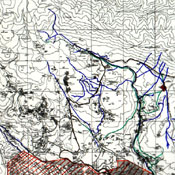
The Pedagogical Trail: The connection between Ecology and History The main target of the Pedagogical Trail is to inform both pupils and the public of Cusco about local ecosystems and their own history and to explain the ecological, economical and social interactions and depen-dencies in this region. On a scientific level, visitors to the Pedagogical Trail will learn about the diversity of native and introduced flora and fauna in the different ecological levels of this macro-ecosystem. They will hear about the numerous cir-cumstances and requirements for life of the different organisms, about the specializations and symbioses that facilitate their survival, and about the various survival strategies that thus have evolved over thousands of years. On a historical level, they will have access to detailed information about the numerous constructions of the Inca epoch and their cultural, social and/or economic significance. They will understand the connection bet-ween the hierarchical political structures of the Inca state and its integral organization and administration of cultivation on all eco-levels. Visitors will learn about the empirical knowledge of the Incas in the areas of astro-nomy, physics, medicine and biology, about their understanding and managing of complex systems and about their mythical life and modes of religious belief. The adept and harmonious organization of a wide variety ecosystem exhibited by their ancestors will provide for the visitors an example of a society, which achieved a high level of ecological sustaina-bility. By comparing ancient and recent forms of land-use, the visitors will examine on an eco-sociological level the benefits that can be extracted by the human from these natural resources, but also the possible noxious effects on fertility of the antropic use of nature. Through the study of the interactions between the biotic and abiotic elements of a particular eco-system visitors to the Pedagogical Trail will be able to understand the influences and interdependencies between the antropic world and its natural environment. Through the direct experience of the mythical world of their ancestors and the nature of the area itself, they will also reco-gnize the significance of nature not only as a vital physical but also as a unique spiritual source of live. This active exposition of the different ecological and social debates of the region, past and present, will facilitate an open discourse about possible solutions to the various problems. Collective discourse amongst large areas of the local society will facilitate the move towards more sustain-able use of primary resources. The principal peculiarity of the Kachimayu River Valley is that despite its steepness, the majority of it is populated and cultivated. The Valley is easily accessible by footpaths but only at a few points is it accessible by car. Connections to the tracks are possible from four areas easily accessible by public transport. The one east-west axis leads the visitors from Yuncaypata downhill to the river and from there by an ancient Inca Trail up to the "Huaca de la Luna" (Temple of the Moon at Roca Cancha). The other one leaves from the archaeological site of Tambomachay following the river in a southerly direction down to the peri-urban village of K'ari Grande. On this route important archaeological constructions such as Tambomachay, Puka Pukara, Roca Cancha, Llulluchayoc Pellor-cocha, Ccorquengcapata, Inkiltambo and Callachaca constitue the historical part of the Trail. In respect of the ecological subjects, the two bisecting paths give an important insight into the different eco-levels and eco-systems of that region. The north-south track leads the visitors through the three eco-levels of the Kachimayu River Valley, while the east-west track shows the strong influence of the topographic and geographic situation of the different microclimates within one only eco-level (see Fig. 17).
Fig. 17: The geographic situation of the Pedagogical Trail in the Kachimayu River Valley. The large volume of information will be transmitted to the visitors primarily by means of big boards on the route that explain these subjects through coloured pictures and verbal descriptions, written in Spanish, Quechua and Latin. They will have to be constructed from a stainless metal such as aluminium, embedded in a concrete cap, designed with engraved letters and using water- and light-proof colours. An additional possibility to guide the visitors are professional tours conducted by the local pupils of the Pukllasunchis school of Huallarqocha or
T'ikapata. This allows the pupils to put their scientific and historical knowledge into practice and provides a small income to them. Another source of income for the local population will be the sale of entrance tickets at Tambomachay and Yun-caypata. |
 |
|